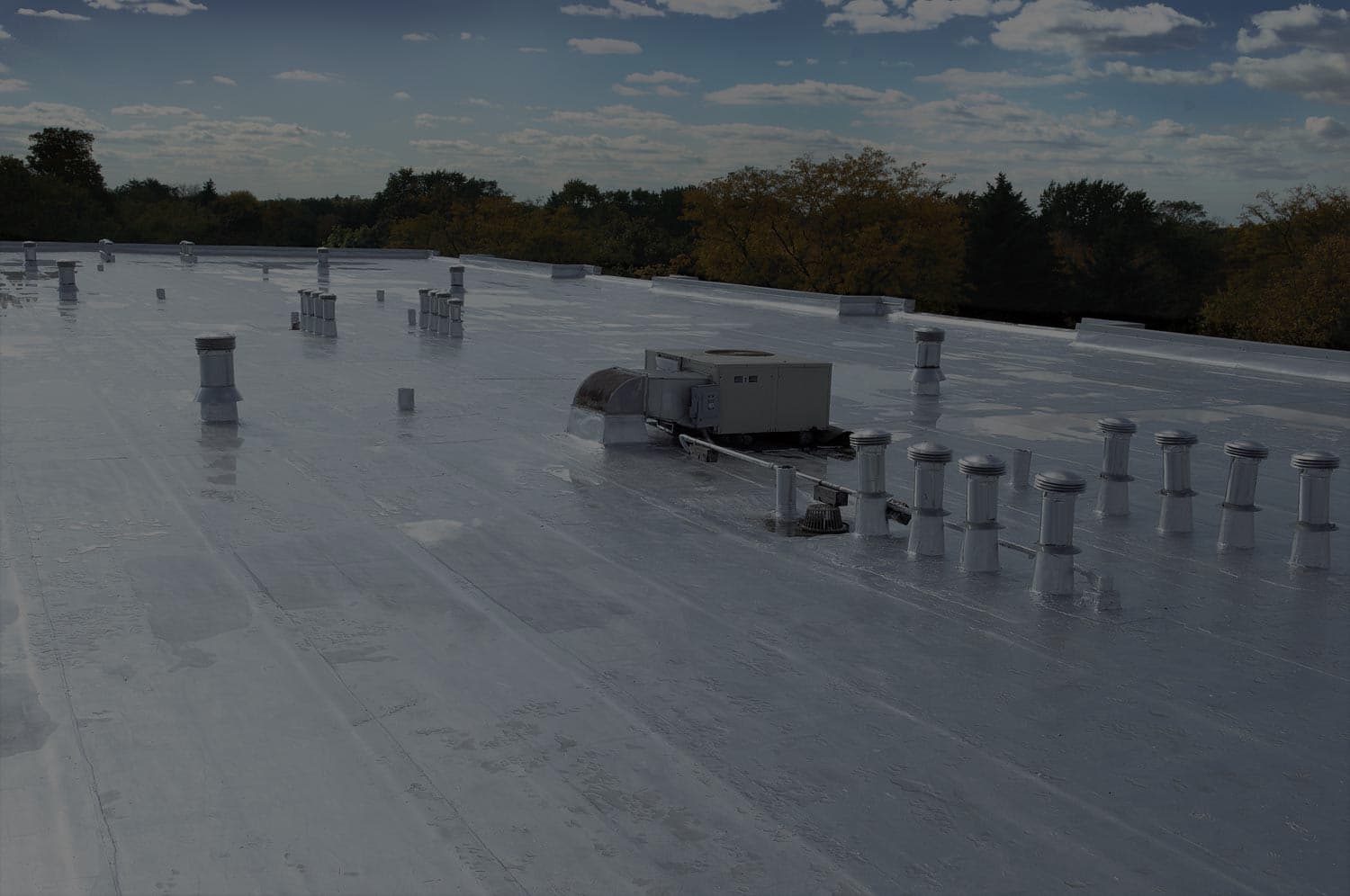
01 / field guideA commercial roof is a complete assembly
The exposed membrane or metal panel is only the surface of the system. Deck condition, vapor control, insulation, cover board, attachment, perimeter securement, flashings, penetrations and drainage work together. Two roofs that look similar from the ground can require different scopes because the components below the surface, building use or moisture history are not the same.
System identification should be documented rather than guessed from color or texture. Records, core cuts, moisture testing and accessible construction details may be needed when the existing assembly is unclear. The evaluation should distinguish confirmed construction from assumptions so the owner understands what is known, what remains to be tested and what could affect price or system selection.
02 / field guideMatch system choices to verified conditions
Heat-welded single-ply systems such as TPO and PVC can serve low-slope commercial buildings when the complete specification addresses attachment, insulation, flashings and drainage. EPDM uses different seam and detailing methods. Modified bitumen and built-up assemblies have their own layering, surfacing and repair considerations. Product names alone do not establish equivalence between proposals.
Commercial metal systems also vary. Standing-seam panels accommodate movement differently from exposed-fastener assemblies, while transitions, curbs, fasteners, closures and sealants remain critical details. Panel condition, corrosion and substrate soundness help determine whether targeted repair, retrofit, restoration or replacement should be investigated. A coating cannot restore metal that has lost structural serviceability.
03 / field guideChoose repair, restore, recover or replace
Repair is often the practical answer for an isolated defect in an otherwise serviceable roof. Restoration may extend an eligible assembly after defined repairs and preparation. A recover can add a new system over suitable existing construction when code, weight, moisture and manufacturer requirements allow it. Replacement removes more of the existing assembly when underlying conditions require broader correction.
Each path should be compared using measured scope, wet-area assumptions, drainage corrections, edge and penetration details, expected disruption and closeout requirements. A lower-capital option is useful only when it addresses the actual failure mode. Conversely, replacement should not be treated as automatic when a documented repair or restoration path can meet the building's objective.
04 / field guideSpecify execution for an occupied commercial property
System selection and production planning are connected. Adhesives, primers, hot work, tear-off, equipment movement and delivery can affect occupied areas differently. The scope should address access, staging, odor or noise, interior protection, temporary water control, daily weather monitoring and coordination with mechanical or electrical trades working around rooftop equipment.
Texas heat, wind-driven rain and storm exposure can influence material handling and production windows. Oklahoma wind, hail and seasonal temperature changes can place different demands on details and scheduling. Those regional realities support careful planning, but they do not replace a building-specific evaluation. Direct coverage and the production approach must be confirmed from the address and accepted scope.