
Measure
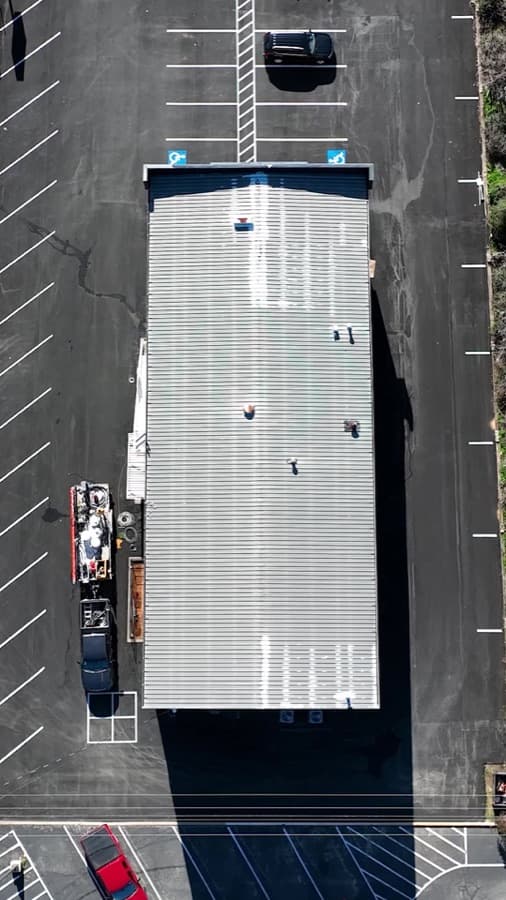
Screen roof area, low-slope sections, penetrations and working height from the commercial address.
Turn a commercial building address or portfolio into preliminary roof area, low-slope or metal-system context and a field-verification plan.
Commercial screening only: roof area and geometry can prioritize an opportunity. Silicone-restoration eligibility still requires field-confirmed system condition, moisture, drainage, access and occupancy planning.
Upload a CSV to rank roof area and field-review priority for low-slope and metal commercial opportunities.
Screen roof area, low-slope sections, penetrations and working height from the commercial address.
Identify the likely roof system, then flag drainage, moisture and substrate checks required for silicone-restoration eligibility.
Confirm roof access, building occupancy and business-continuity constraints before a field evaluation is scheduled.
Preliminary roof intelligence supports prioritization. Address-level imagery and geometry can help estimate roof area, identify broad low-slope or metal sections and organize a commercial opportunity before travel is scheduled. The screen is useful for portfolio triage and partner intake, but it does not diagnose membrane condition, trapped moisture, deck integrity, attachment or coating adhesion.
Field qualification controls the recommendation. A commercial evaluator still documents seams, fasteners, flashings, penetrations, drainage, wet areas, prior repairs, access and occupied-building constraints. Required moisture, adhesion or core testing must be connected to the actual assembly before silicone restoration, repair, recover or replacement is represented as eligible.
The written scope carries the decision. Final quantities, preparation, repairs, safety controls, business-continuity planning, manufacturer requirements, exclusions and concealed-condition procedures belong in the accepted project documents. Accu-Scope shortens the path to that evaluation; it does not order materials, authorize work or replace field verification.