
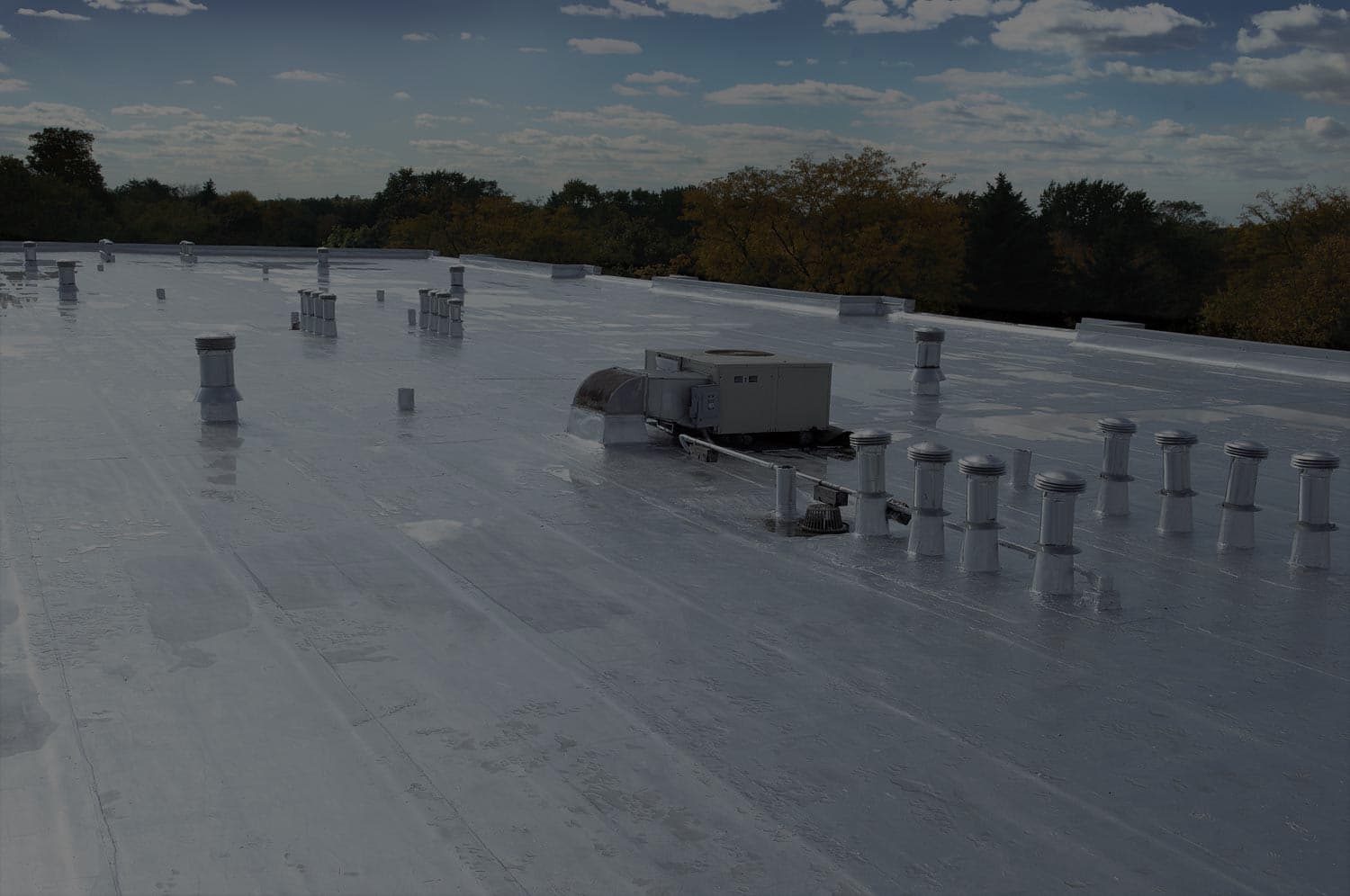
Commercial roof decisions start with the existing assembly.
Accurate Roof Systems evaluates low-slope and metal commercial roofs for repair, restoration, recover or replacement. The recommendation is based on moisture, deck and insulation condition, drainage, penetrations, rooftop traffic, access and the building owner's hold period.
TPO, PVC, EPDM, modified bitumen and commercial metal systems.
A useful scope defines the full assembly—not only the exposed surface. Insulation, cover board, attachment, seams, flashings, perimeter details, curbs and drainage all affect performance and lifecycle cost.
Repair, restore or replace with the operation in mind.
Commercial production planning should address occupancy, equipment, staging, safety, weather protection and business continuity before the work begins.
What to know
Choose the commercial roof path from documented condition.
Commercial roofing is not one interchangeable product category. Low-slope membranes, metal panels, modified systems, insulation, deck, drainage, penetrations and perimeter details work together. An evaluation should identify the assembly and failure mode before a repair, restoration, recover or replacement proposal is treated as comparable.
Document the existing assembly
Record system type, approximate age, attachment, insulation, drainage, flashings, penetrations, rooftop equipment, prior repairs and accessible interior evidence. Moisture testing or core cuts may be appropriate when surface observations cannot establish what is happening below the membrane.
Protect building operations
Commercial work can affect entrances, parking, inventory, tenants, rooftop equipment and operating hours. The proposal should address access, safety, odor or noise, temporary water protection, daily dry-in, weather contingencies and communication responsibility.
Compare lifecycle scope
Price comparisons should use measured quantities, equivalent inclusions, system and warranty requirements, expected service life, maintenance and concealed-condition assumptions. A lower initial number is not equivalent when it transfers necessary work into change orders or leaves the original failure unresolved.
A dependable commercial roofing record connects the building address, responsible contact, existing assembly, observed condition and requested outcome. It should separate confirmed facts from assumptions, identify what still requires field verification and preserve photographs, measurements, dates and written decisions in one project file. That discipline helps owners, facility teams, contractors, manufacturers and financing or warranty contacts evaluate the same scope without treating a website description as a diagnosis, approval or promise of coverage.
Next step: Send the commercial building address, known roof type, active concerns and operating constraints. Accurate can confirm direct coverage and the appropriate condition-based evaluation step.